Yeezy Marketing Strategy (2025)
The Yeezy Marketing Strategy combines strong branding, exclusive product drops, creative partnerships, and influencer-driven engagement to cultivate a highly coveted streetwear phenomenon. Emerging from Kanye West’s collaboration with Adidas in 2015, Yeezy quickly evolved into a pop‑culture icon, reshaping sneaker culture and limited-edition fashion. Its scarcity-driven model created urgency, loyalty, and perpetual consumer buzz.
Yeezy stands apart through its minimalist aesthetic, high-profile celebrity association, and carefully controlled product releases. This has encouraged resale markets and heightened perception of value. By embracing exclusivity—few pairs, global “drop” events, and regionally customized styles—Yeezy fosters a sense of community among dedicated fans and trendsetters alike.
What distinguishes its approach is the alignment with broader lifestyle and identity trends: street culture meets high fashion, creative expression intersects with limited-supply art pieces. From social media teasers to partner-hosted events, Yeezy marketing taps into experiences rather than merely selling shoes. Its narrative extends into cultural commentary, music, and fashion.
By tying product launches to emotion, identity, and social influence, Yeezy leverages human behavioral drivers—FOMO (fear of missing out), self‑expression, and belonging. The result: each release becomes part of a larger cultural moment. This introduction provides a snapshot of how Yeezy Marketing Strategy transformed a brand into more than apparel—it became a lifestyle symbol.
Yeezy Goals and Objectives
Yeezy’s marketing goals are rooted in building a fashion empire that thrives on exclusivity, cultural impact, and brand loyalty. At its core, the brand aims to challenge norms in footwear and apparel, blending celebrity influence with avant-garde design to redefine modern streetwear.
Key objectives driving Yeezy’s success include:
- Amplify Brand Exclusivity: Yeezy maintains its allure by limiting production. By offering scarce inventory, the brand boosts desire and fuels the resale market, enhancing perceived value. For example, Yeezy Boost 350 drops often sell out within minutes, reinforcing its elite status.
- Expand Global Reach Without Mass Appeal: Yeezy targets international markets through strategic releases while avoiding oversaturation. Regional drops and pop-up experiences make the brand feel local, even as it scales globally.
- Cultivate a Cult-Like Following: Yeezy nurtures loyalty by creating a brand ethos people want to embody. From minimalist aesthetics to cryptic announcements, the brand invites fans to interpret its vision and remain engaged.
- Leverage Celebrity Power: Kanye West’s persona is central to Yeezy’s identity. Whether through social media rants or surprise music releases tied to Yeezy launches, he blurs the line between personal branding and product marketing.
- Innovate Through Design and Materials: Yeezy constantly experiments with new silhouettes and sustainable materials. The Foam Runner, for example, pushed boundaries with its algae-based construction and futuristic form.
- Drive Direct-to-Consumer Sales: Yeezy aims to maximize margins and data collection by prioritizing DTC channels like Yeezy Supply and Adidas’ Confirmed app. This also allows more control over the release experience.
- Influence Culture Beyond Fashion: Through collaborations, provocative design, and alignment with music or social commentary, Yeezy embeds itself into cultural discourse.
Each objective ties back to Yeezy’s mission of crafting more than fashion—it curates identity, conversation, and exclusivity.
Who is Yeezy’s Target Audience?
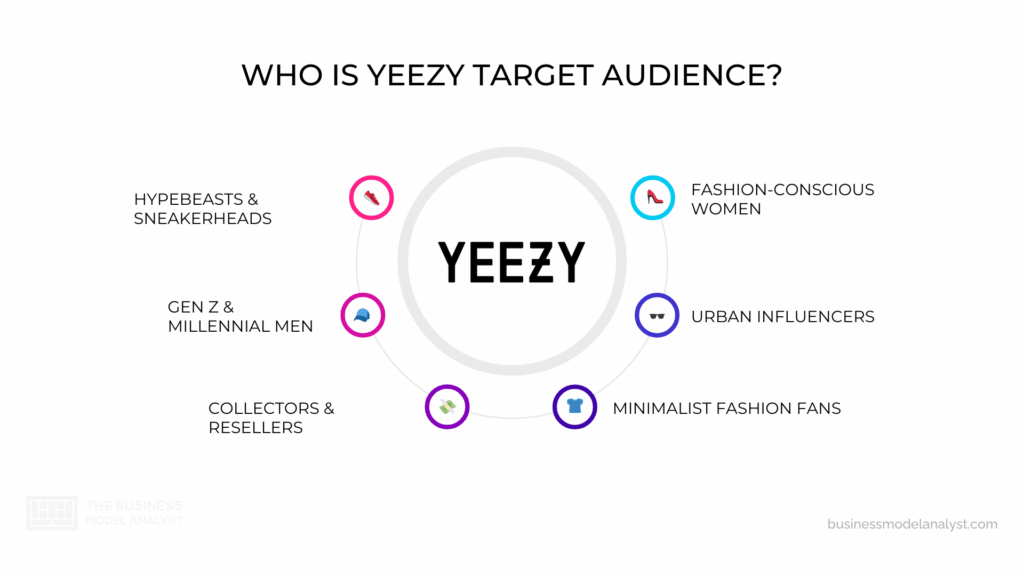
Yeezy’s marketing success hinges on a deep understanding of its multifaceted audience. It crafts messaging, products, and experiences tailored to a specific yet broad range of consumers driven by identity, aspiration, and cultural relevance.
Yeezy Demographics:
Yeezy’s core demographic includes:
- Age: Primarily 16–35 years old
- Gender: Predominantly male, but with increasing appeal to women
- Income Level: Middle to high income; willing to invest in premium streetwear
Buyers typically include Gen Z and Millennials who value unique fashion and have discretionary spending for exclusive products.
Yeezy Psychographics:
Yeezy appeals to:
- Trendsetters and Style Seekers: Consumers who follow fashion closely and strive to express individuality.
- Cultural Enthusiasts: Those influenced by music, streetwear, and celebrity culture.
- Minimalists: Fans of clean, futuristic design and understated luxury.
- Collectors: Buyers who value the scarcity of each release and often resell or display items.
These consumers often find identity through their wardrobes, with Yeezy serving as a status symbol of cultural fluency and style.
Yeezy Geography
Yeezy operates with global reach but emphasizes:
- Urban Hubs: Cities like New York, Los Angeles, Tokyo, and Paris are hotspots for Yeezy culture.
- Localized Drops: Special editions and timed regional releases enhance scarcity and local buzz.
- Adaptability: While maintaining a universal aesthetic, Yeezy aligns with regional styles and climates (e.g., desert tones for Middle Eastern markets).
Yeezy Behavior
Yeezy fans are:
- Drop-Driven Shoppers: They plan around launches, join raffles, and follow news through apps and influencers.
- Engaged on Social Media: They watch Kanye’s posts, brand leaks, and influencer reviews.
- Brand Loyalists: They follow Yeezy across categories—shoes, apparel, and even into Yeezy Home or GAP collaborations.
By understanding this audience’s aspirations, digital habits, and cultural touchpoints, Yeezy ensures each product feels tailored, intentional, and desirable.
Marketing Mix of Yeezy
Yeezy Product
Yeezy’s product strategy revolves around innovation, exclusivity, and design-led identity. Signature sneakers like the Yeezy Boost 350, Foam Runner, and Slide showcase futuristic aesthetics and comfort. Apparel lines follow a muted, minimalist palette that aligns with modern streetwear. Limited releases and seasonal collections create hype, making each item feel like wearable art. Collaborations with GAP and Balenciaga expand Yeezy’s lifestyle appeal while maintaining its niche.
Yeezy Price
Yeezy employs a premium pricing model, reflecting its exclusivity and design prestige. Footwear often retails from $200 to $300, with resale prices soaring based on rarity. Occasional lower-cost drops (like Yeezy Slides) attract younger or budget-conscious fans without diluting brand value. This layered pricing allows Yeezy to remain aspirational while still engaging broader audiences.
Yeezy Place
Yeezy’s distribution is highly selective. Products are sold through:
- Adidas’ Confirmed app
- Yeezy Supply website
- High-end retailers (on select occasions)
This limited availability fosters urgency and desirability. Flash releases, geo-specific drops, and online-only access drive demand. In-store events and pop-ups in major cities offer immersive brand moments tied to launches.
Yeezy Promotion
Promotion is unconventional and heavily reliant on:
- Kanye West’s personal brand
- Cryptic social media teasers
- Strategic leaks and rumors
- Collaborations (e.g., with fashion houses, influencers)
Rather than traditional ads, Yeezy uses scarcity, storytelling, and cultural cues to generate buzz. Music videos, runway shows, and word-of-mouth play critical roles in driving anticipation and brand loyalty.
Each P in Yeezy’s marketing mix contributes to a brand that doesn’t just sell fashion—it sells emotion, relevance, and exclusivity.
What are Yeezy’s Strategies?
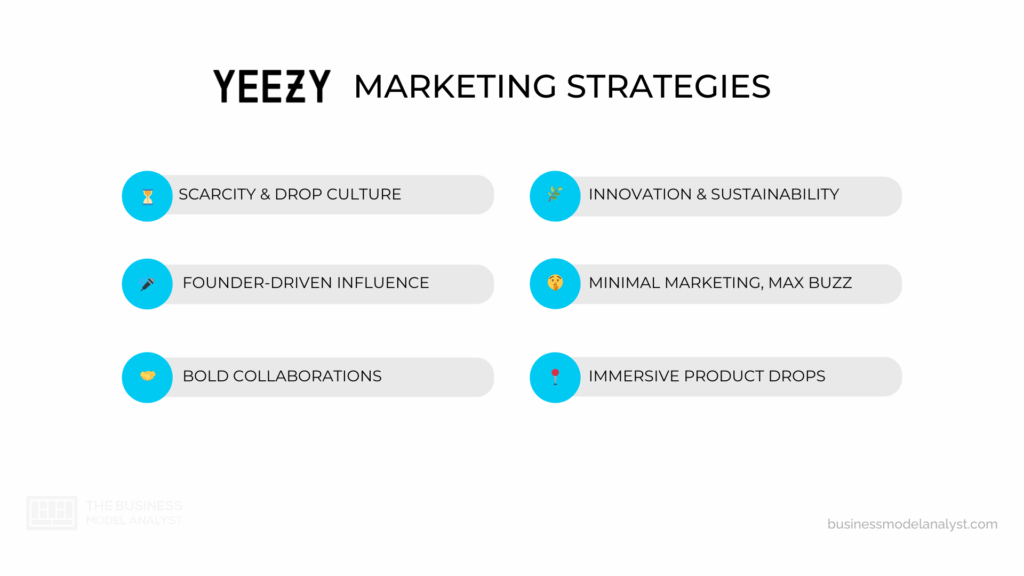
Cultivating Scarcity and Exclusivity
Yeezy thrives on limited releases, which generate demand, resale value, and a cult-like following. Products drop in small batches through controlled channels, often announced last-minute. This “drop culture” drives urgency and positions Yeezy as a brand for the select few, not the masses.
Leveraging Celebrity Influence
Kanye West isn’t just a designer—he is the brand. His social media presence, music, and personal image fuel Yeezy’s mystique. A tweet or paparazzi photo in unreleased gear can ignite global conversations. This direct connection between creator and audience personalizes the brand.
Collaborating for Cultural Reach
Strategic collaborations expand Yeezy’s influence. The GAP x Yeezy line introduced affordability while maintaining Kanye’s creative vision. A Balenciaga partnership lent high-fashion legitimacy. These moves allow Yeezy to blend streetwear with luxury, capturing diverse fashion consumers.
Innovating Design and Sustainability
From algae-based Foam Runners to laceless sneakers, Yeezy sets trends through bold design. Embracing sustainable materials and futuristic silhouettes, it appeals to eco-conscious consumers and design purists alike, cementing its role as a trend initiator, not follower.
Minimal Marketing, Maximum Impact
Yeezy disrupts traditional marketing. No flashy campaigns—just cryptic images, influencer seeding, and curated leaks. This keeps fans guessing and engaged, turning product discovery into a game. Silence often speaks louder than a billboard.
Creating Experiential Drops
Instead of retail rollouts, Yeezy uses immersive events or geofenced app releases. Fans line up physically or digitally, adding ceremony to each launch. This strengthens the emotional connection and turns buyers into participants.
Each strategy positions Yeezy as a symbol of cultural influence, pushing fashion, commerce, and storytelling boundaries.
Yeezy Channels
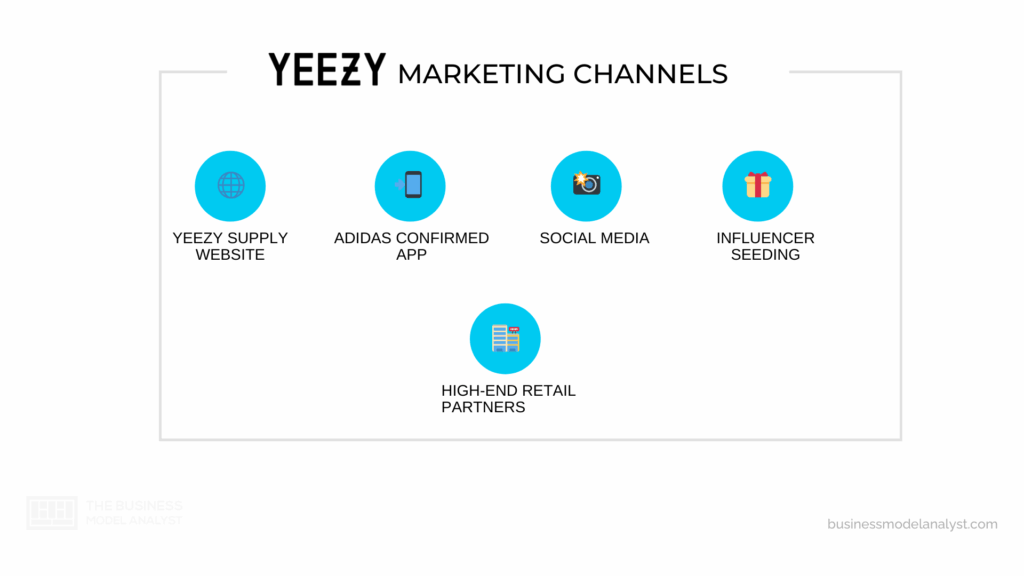
Yeezy relies on a mix of digital, retail, and experiential channels to engage its audience and distribute its products. Each touchpoint is curated to reflect the brand’s exclusivity and avant-garde identity.
Direct-to-Consumer Platforms
Yeezy Supply and Adidas’ Confirmed app are the brand’s primary digital storefronts. These platforms host exclusive drops, raffles, and flash sales. Limited availability enhances anticipation, while data collection helps refine customer targeting for future releases.
Social Media and Influencers
Although Yeezy doesn’t run traditional ads, Kanye West’s Instagram and X (formerly Twitter) are vital promotional tools. Teasers, personal photos, and strategic leaks often spark viral buzz. Influencers and celebrities receiving early pairs further fuel interest, positioning Yeezy in trendsetting circles.
Select Retail Partners
In rare cases, Yeezy products are available through high-end retailers like SSENSE or Foot Locker. These partners amplify reach while maintaining brand prestige. However, inventory is typically restricted to preserve the exclusivity of online-first channels.
Pop-Up Stores and Events
Yeezy uses experiential retail in major cities to drive hype. Temporary installations, often tied to music releases or fashion weeks, immerse fans in the brand’s world. These events turn shopping into an experience, deepening emotional connection.
Music and Fashion Crossovers
Kanye’s music videos, album drops, and fashion shows serve as organic marketing channels. Clothing and footwear often debut in these culturally significant moments, ensuring Yeezy remains a topic in both entertainment and fashion spheres.
By carefully orchestrating where and how its audience engages, Yeezy amplifies its mystique and maintains a high-impact presence with minimal noise.
How to Apply Yeezy Strategies to Your Business
Embrace Scarcity to Build Desire
Limit product availability to create urgency. Use timed drops or exclusive editions to make customers eager to buy. Implement online raffles or limited-run events to replicate Yeezy’s excitement, boosting brand prestige and word-of-mouth.
Leverage Influencer and Founder Persona
Align your brand with a relatable, influential figure or cultivate a strong founder identity. Share authentic stories and behind-the-scenes content that connect emotionally with your audience, just as Kanye West fuels Yeezy’s buzz with his personal brand.
Create a Distinctive Design Language
Focus on unique, recognizable product design that stands out. Invest in innovation and quality, reflecting your brand values. Yeezy’s minimalism and futuristic styles build loyalty; similarly, consistent and bold design attracts dedicated fans.
Utilize Direct-to-Consumer Channels
Prioritize selling through your own platforms to control customer experience and data. Yeezy Supply and Adidas Confirmed allow for personalized engagement and better margin control. Build a seamless, engaging online store and mobile experience.
Craft Experiential Product Launches
Transform launches into events. Whether through pop-ups, online exclusives, or interactive campaigns, create moments that foster excitement and community participation. This turns purchases into memorable experiences that deepen brand loyalty.
Harness Social Media Subtlety
Avoid over-saturation. Instead, use cryptic posts, teasers, and influencer seeding to keep your audience curious and engaged. Encourage organic conversations around your product to generate authentic hype without heavy ad spend.
Expand Through Strategic Collaborations
Partner with complementary brands or creatives to tap new markets while maintaining your identity. Collaborations like Yeezy x GAP broaden reach without compromising exclusivity, offering fresh appeal and shared audiences.
By applying these steps, your business can cultivate a strong, engaged community and position itself as a coveted brand that resonates culturally and commercially.
Conclusion
Yeezy’s marketing strategy is a masterclass in blending exclusivity, culture, and innovation to create a brand that transcends fashion. By emphasizing scarcity, leveraging celebrity influence, and crafting immersive experiences, Yeezy fosters deep loyalty and global desirability. Its distinctive approach reshapes consumer expectations around identity, community, and value.
As markets evolve, Yeezy’s model demonstrates how cultural relevance and strategic control can drive sustained growth without mass appeal. For businesses aiming to stand out, Yeezy offers valuable lessons in storytelling, design, and audience engagement. Its success underscores the power of creating not just products but moments and movements that resonate across generations.
link