Chanel Marketing Strategy (2025)
The Chanel Marketing Strategy exemplifies how heritage brands can maintain exclusivity while adapting to modern consumer expectations. Chanel positions itself as a luxury icon by mastering brand storytelling, selective distribution, and aspirational messaging. Its marketing approach is rooted in elegance, timeless appeal, and emotional resonance, reinforcing Chanel as a symbol of sophistication and personal identity.
Founded in 1910 by Gabrielle “Coco” Chanel, the French fashion house revolutionized women’s fashion with a focus on minimalism and empowerment. Over the decades, Chanel has expanded into haute couture, ready-to-wear, accessories, fragrances, and beauty—each category reinforcing its image of elegance and innovation. Its most legendary product, Chanel No. 5, remains a global symbol of timeless luxury.
Chanel’s marketing approach stands apart by rejecting mass visibility in favor of exclusivity. Unlike many modern brands, Chanel limits online sales and avoids discounting, preserving its high-end image. It invests in cinematic campaigns, iconic celebrity ambassadors, and immersive fashion experiences. These strategies not only maintain desirability but also position Chanel as a cultural authority, not just a fashion brand.
In an age of influencer saturation and fast fashion, Chanel’s emphasis on heritage, craftsmanship, and emotional storytelling aligns with rising consumer values around authenticity and meaning. This balance between tradition and modernity allows Chanel to remain both relevant and revered, making its marketing strategy a blueprint for enduring luxury success.
Chanel Goals and Objectives
Chanel’s marketing strategy is driven by a clear set of goals and objectives centered on preserving brand prestige, cultivating emotional connections, and achieving long-term growth. As a luxury brand, Chanel avoids short-term promotional tactics and instead focuses on sustaining exclusivity, desirability, and deep consumer engagement.
One of Chanel’s primary goals is to maintain its brand exclusivity. Chanel restricts access through selective retail distribution and avoids e-commerce for most of its fashion lines. This ensures that the brand maintains an aura of luxury and scarcity, which enhances its perceived value.
Another key objective is to strengthen brand heritage and storytelling. Through high-budget campaigns that reference Coco Chanel’s legacy and timeless design codes, Chanel continues to remind consumers of its origin, reinforcing loyalty and emotional resonance.
Chanel also aims to expand its global footprint in a controlled manner. For instance, opening flagship boutiques in culturally rich cities like Seoul or Abu Dhabi allows the brand to reach affluent consumers while maintaining its elite positioning.
To drive growth in beauty and fragrance, Chanel invests in multi-sensory campaigns and exclusive launches. Products like Chanel No. 5 are reintroduced to younger consumers through limited editions, immersive pop-ups, and influencer-led storytelling.
A hypothetical scenario illustrating this: Chanel might launch a global campaign around the Little Black Dress, pairing it with exclusive boutique events and celebrity narratives—deepening brand engagement without mass promotion.
Additionally, Chanel seeks to deepen customer relationships through VIP programs, bespoke services, and private fashion shows, ensuring that high-net-worth clients feel valued and personally connected to the brand.
By balancing heritage with strategic expansion, Chanel ensures that its objectives uphold both its legacy and future aspirations.
Who is Chanel’s Target Audience?
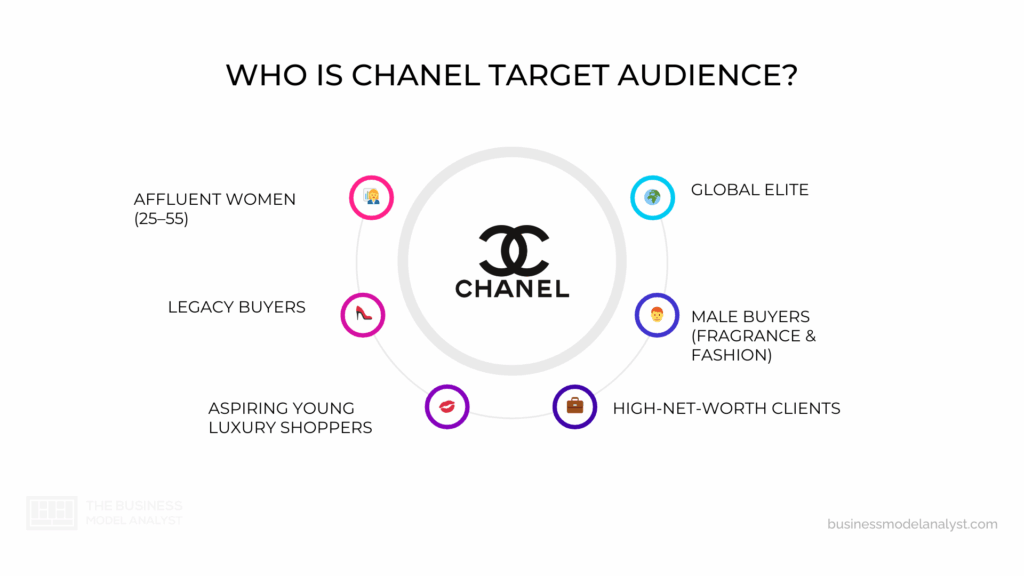
Chanel’s target audience is carefully segmented to maintain its prestige while expanding global relevance. The brand appeals to discerning consumers who value timeless elegance, cultural sophistication, and exclusive experiences. Its audience is united more by lifestyle and aspiration than by traditional demographic boundaries.
Chanel Demographics
Chanel primarily targets affluent women aged 25 to 55, particularly professionals, entrepreneurs, and social elites. While women remain the core market, Chanel’s men’s fragrance and fashion accessories subtly court affluent male buyers. Most customers fall into the upper-middle to high-income brackets, capable of spending on premium fashion, beauty, and luxury goods.
Chanel Psychographics
Chanel consumers are defined by their values: refinement, authenticity, and emotional storytelling. They are tastemakers, not trend followers—people who appreciate craftsmanship over novelty. Many are legacy buyers who grew up with Chanel or aspire to join a sophisticated cultural narrative. These are individuals drawn to symbolism—such as the interlocking C’s or the No. 5 bottle—more than logos.
They value exclusivity and seek emotional experiences with brands. Owning Chanel isn’t just a purchase; it’s a rite of passage into a curated lifestyle.
Chanel Geography
Chanel has a global reach, with strongholds in Europe, North America, and Asia. While Paris remains its spiritual home, the brand is expanding into emerging luxury markets like China, South Korea, and the Middle East. Regional boutiques adapt slightly—offering culturally nuanced service or product selection—without diluting the core brand message.
Chanel Behavior
Chanel’s audience shops deliberately, not impulsively. Purchases are often planned, celebratory, or symbolic. Consumers engage deeply with the brand through runway shows, cinematic campaigns, and boutique experiences. In beauty and fragrance, buyers may be younger and more exploratory, drawn in through lower-cost entry points like lipsticks or mini fragrances.
Chanel expertly tailors messaging to these segments: exclusive product drops for collectors, heritage stories for loyalists, and immersive content for digital natives. This multi-tiered approach ensures Chanel remains aspirational to all, but accessible only to those who align with its values.
Marketing Mix of Chanel
Chanel Product
Chanel’s offerings reflect timeless luxury—spanning haute couture, ready-to-wear, handbags, accessories, watches, fragrances, and cosmetics. Each product embodies precision, heritage, and elegance. Flagship items like the Chanel No. 5 perfume or the 2.55 handbag are icons in their own right, reinforcing brand identity. Seasonal collections refresh core themes with creative reinterpretations, while exclusive lines—like Métiers d’Art—highlight artisanal craftsmanship.
Chanel Price
Chanel employs a premium pricing strategy rooted in exclusivity, brand legacy, and product craftsmanship. Prices are rarely discounted, preserving perceived value. Whether it’s a $10,000 handbag or a $50 lipstick, each item supports the brand’s luxury positioning. This approach filters out mass-market buyers while reinforcing Chanel as a symbol of refined status and emotional investment.
Chanel Place
Chanel’s distribution is deliberately limited to flagship boutiques, select department stores, and its own beauty-focused e-commerce platforms. Fashion collections are not sold online to preserve exclusivity. Boutiques are designed as luxury sanctuaries—offering curated service and immersive storytelling. For instance, stores in Paris or Tokyo often feature art displays and bespoke fitting rooms, enhancing the customer journey.
Chanel Promotion
Chanel promotes through cinematic campaigns, celebrity ambassadors, and fashion shows. Faces like Margot Robbie and Timothée Chalamet anchor brand storytelling with cultural cachet. Campaigns resemble mini films—shot by top directors and styled with iconic symbolism. On social media, Chanel uses minimal but high-quality content to spark intrigue, favoring elegance over frequency. Experiential promotions, such as No. 5-themed exhibitions, deepen emotional engagement and media buzz.
By harmonizing high art, heritage, and modern storytelling across its marketing mix, Chanel preserves its status as a luxury benchmark.
What are Chanel’s Strategies?

Elevating Heritage Through Storytelling
Chanel centers its brand identity on the legacy of Gabrielle “Coco” Chanel. Campaigns and products often revisit symbols like tweed suits, camellias, or the Little Black Dress. For example, the “Inside Chanel” video series educates viewers on brand history—reinforcing emotional ties through cinematic storytelling rooted in heritage and feminism.
Controlled Exclusivity
Unlike most brands, Chanel avoids mass e-commerce for fashion and limits product availability. This strategy sustains its aura of scarcity. For instance, customers must visit boutiques for fashion collections, preserving an elite in-store experience. This selective access fuels desirability and brand mystique, key to Chanel’s luxury positioning.
Strategic Celebrity Endorsements
Chanel collaborates with ambassadors who embody the brand’s values. Faces like Kristen Stewart, Jennie Kim, and Keira Knightley are more than endorsers—they are brand muses. Their diverse global appeal helps Chanel remain culturally relevant while maintaining elegance. These relationships humanize Chanel and create aspirational pathways for consumers.
Cultural Campaigning
Chanel leverages culture—art, cinema, fashion weeks—to remain embedded in global conversations. Its runway shows, such as those staged at the Grand Palais, are major cultural events. The brand also supports artists and exhibits, subtly aligning Chanel with intellectual prestige and the avant-garde.
Innovation Through Beauty and Fragrance
While fashion remains exclusive, Chanel scales innovation in beauty and fragrance. Launches like the eco-conscious No. 1 de Chanel skincare line show its commitment to sustainability. These accessible lines bring new audiences into the brand while reinforcing its leadership in product innovation and responsible luxury.
Minimalist Digital Presence
Chanel’s digital strategy is deliberate: fewer posts, higher impact. Unlike brands that saturate social feeds, Chanel opts for editorial-style content, focusing on brand aesthetics. This minimalist strategy enhances curiosity and brand respect, echoing its core value—less is more.
Event-Led Engagement
From private showings to immersive exhibitions, Chanel uses events to deepen brand loyalty. A campaign might be supported by an exclusive dinner or pop-up museum, enhancing intimacy and word-of-mouth. These tactile experiences distinguish Chanel in a crowded luxury landscape.
Chanel Channels
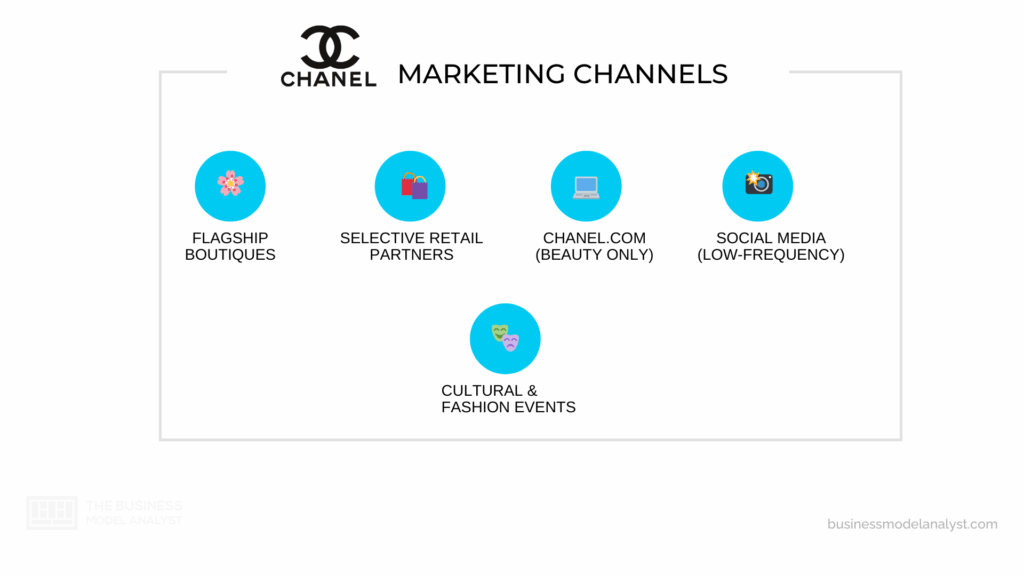
Chanel strategically selects its communication and sales channels to align with its luxury positioning, balancing exclusivity with global reach. Each channel is carefully curated to ensure that the brand experience remains consistent, personal, and emotionally resonant.
Flagship Boutiques are Chanel’s most important touchpoints. Located in cities like Paris, New York, and Dubai, these stores offer immersive environments with custom interiors, personalized service, and limited-edition products. Boutiques are not just retail spaces—they’re brand temples where consumers connect intimately with Chanel’s heritage and craftsmanship.
Selective Retail Partners, such as Bergdorf Goodman or Harrods, provide controlled exposure in high-end environments. These partnerships are tightly managed to ensure consistent presentation and protect brand equity. Placement in such stores signals prestige and reinforces Chanel’s elite status.
Chanel.com is a key digital channel, but with boundaries. The site sells beauty and fragrance lines globally, but fashion collections remain in-boutique only. This controlled digital presence maintains exclusivity while introducing younger audiences to the brand through accessible products like lipsticks or skincare.
Social Media, particularly Instagram and YouTube, serve as storytelling platforms. Chanel releases high-production films, behind-the-scenes content, and curated campaign visuals. Unlike mass brands, it avoids over-posting, favoring elegance and intrigue.
Cultural Events and Fashion Shows are also vital. Livestreamed runway shows, No. 5 exhibitions, and exclusive dinners allow Chanel to foster both media coverage and deep emotional connections.
Through these refined channels, Chanel balances global visibility with exclusivity, ensuring its legacy endures in the digital and physical worlds.
How to Apply Chanel Strategies to Your Business
Chanel’s marketing success offers timeless lessons for businesses across industries. Whether you’re a startup or an established brand, these strategic moves can elevate your presence and deepen customer relationships.
Craft a Brand Story That Resonates
Strategy: Chanel anchors its brand in Coco Chanel’s personal narrative—blending innovation, rebellion, and timeless elegance.
Implementation: Develop a clear, authentic brand story. Whether it’s your founder’s mission or a community-driven purpose, tell that story across your website, packaging, and social media.
Benefit: Builds emotional connection and makes your brand memorable.
Focus on Product Differentiation, Not Saturation
Strategy: Chanel avoids trend-chasing, instead refining iconic products like the 2.55 handbag or No. 5 fragrance.
Implementation: Identify 1–2 core offerings and perfect them. Use thoughtful design, quality materials, or unique packaging to set them apart.
Benefit: Encourages customer loyalty and word-of-mouth through product excellence.
Maintain Strategic Exclusivity
Strategy: Chanel limits product access to boutique and selective channels to retain luxury appeal.
Implementation: Consider limited releases, invite-only access, or exclusive tiers. Even non-luxury brands can offer exclusivity through membership perks or early drops.
Benefit: Creates anticipation and positions your brand as desirable.
Leverage Influencers That Reflect Brand Values
Strategy: Chanel collaborates with culturally aligned ambassadors, not just trendsetters.
Implementation: Partner with influencers or micro-creators whose values and audience match yours. Prioritize long-term alignment over short-term reach.
Benefit: Enhances authenticity and credibility.
Prioritize High-Impact Content Over Volume
Strategy: Chanel’s digital presence is minimal but cinematic—every post aligns with the brand’s aesthetics.
Implementation: Invest in quality content—photos, videos, blog posts—that reflect your voice and mission. Avoid flooding feeds.
Benefit: Elevates brand perception and keeps content purposeful.
Create Immersive Brand Experiences
Strategy: Chanel uses events, pop-ups, and exhibitions to deepen engagement.
Implementation: Host product launches, behind-the-scenes tours, or virtual events. Let customers experience your brand beyond the product.
Benefit: Builds emotional loyalty and distinguishes you from competitors.
Scale with Integrity
Strategy: Chanel expands carefully—only entering markets and categories that align with its core identity.
Implementation: Grow intentionally. Assess whether new markets, products, or campaigns reinforce your brand or dilute it.
Benefit: Ensures long-term sustainability and preserves brand equity.
By applying these Chanel-inspired principles with authenticity and strategic clarity, your business can enhance its identity, elevate customer perception, and grow with purpose.
Conclusion
Chanel remains one of the most iconic brands in the world—not because it follows trends, but because it sets them. Its ability to blend timeless elegance with cultural relevance defines the strength of the Chanel Marketing Strategy. From heritage storytelling and selective distribution to cinematic campaigns and immersive experiences, Chanel curates desire at every touchpoint.
What makes Chanel exceptional is its disciplined commitment to brand integrity. While other brands chase digital noise or mass appeal, Chanel prioritizes quality, emotion, and exclusivity. This focus enables it to adapt thoughtfully to modern consumers—especially those seeking meaning, status, and beauty in their purchases.
As markets evolve and trends shift, Chanel’s principles remain instructive: know your values, communicate with clarity, and design experiences that transcend the product. Businesses that internalize and apply these lessons will not only gain loyal customers but build legacies that endure—just like Chanel.
link